
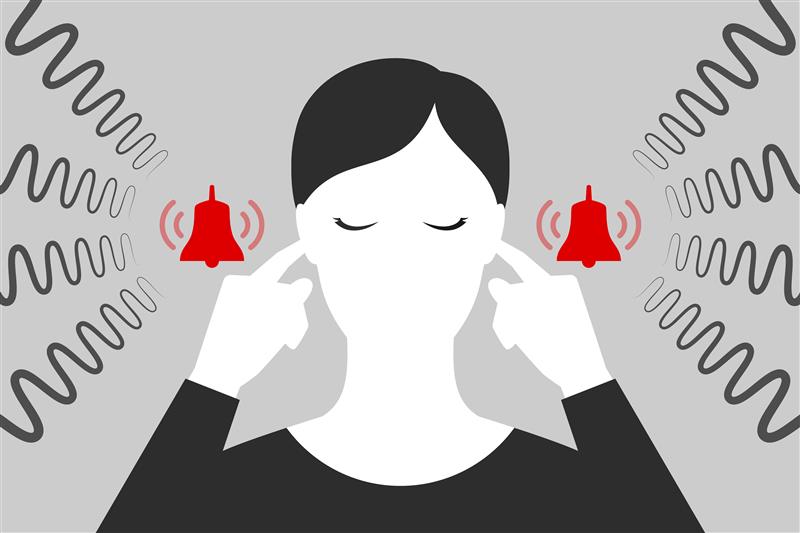
Many people experience a persistent ringing in their ears. This common affliction, known as tinnitus, affects roughly 10% of the American adult population.1 Tinnitus is defined as the perception of sound when none is occurring. For some, it is a minor nuisance. For others, it is a major impediment to their quality of life, leading to fatigue, depression, anxiety, irritability and memory/concentration problems.
Tinnitus is not a disease itself, but a symptom. As such, it can occur due to a number of conditions. These include hearing loss, noise exposure, head or neck trauma, high blood pressure, vascular disorders, heart conditions, ototoxic medications, benign tumors known as acoustic neuromas and impacted earwax. Sometimes, the cause is unknown.
The good news is that there are treatment options. In rare cases, the underlying condition responsible for the symptoms can be found and treated. More commonly, doctors will employ a tinnitus management strategy, which can include the following:
Standard Hearing Devices: Because hearing devices provide corrective sound, consistent all day use of the hearing aids can help cover up the sound of the tinnitus and allow the brain to focus on ambient noises instead.
Wearing them regularly also reduces the cognitive burden involved in the listening process, decreasing stress and anxiety- factors that tend to worsen tinnitus symptoms.
Combo Hearing Devices (Devices with Built-In Maskers): Since nearly 90% of individuals with tinnitus also have hearing loss,2 combo hearing devices make a lot of sense. They provide double the benefit- the hearing aid raises the volume of sounds other than tinnitus, and the built-in tinnitus masker emits random sound frequencies distributed throughout the hearing spectrum to disguise the persistent noise of tinnitus.
While tinnitus can be troublesome, there are ways to manage it. Take control of your tinnitus by scheduling an appointment to discuss your options. Call (559) 432-5973 today.
References
1 American Tinnitus Association. (2020). Understanding the facts. https://www.ata.org/understanding-facts
2 Hearing Health Foundation. (n.d.). Hearing Loss & Tinnitus Statistics. https://hearinghealthfoundation.org/hearing-loss-tinnitus-statistics